
For libraries
The story of Pietro Querini reflects in many ways the values that libraries in Nordland stand for today. When the Venetian merchant was shipwrecked in the 15th century and came ashore on Røst , he was met with care, openness and practical help. The hospitality he experienced in a foreign community made a deep impression and was later known through his own stories.
The encounter between Querini and the fisherfolk was not just about survival, but about the exchange of knowledge, experiences and cultures. The story is often cited as an early example of how openness and a willingness to welcome the stranger can have lasting ripple effects.
The libraries in Nordland continue these values today. They are open and inclusive meeting places and important arenas for informing the population of Nordland about this fantastic history.
Querini's account
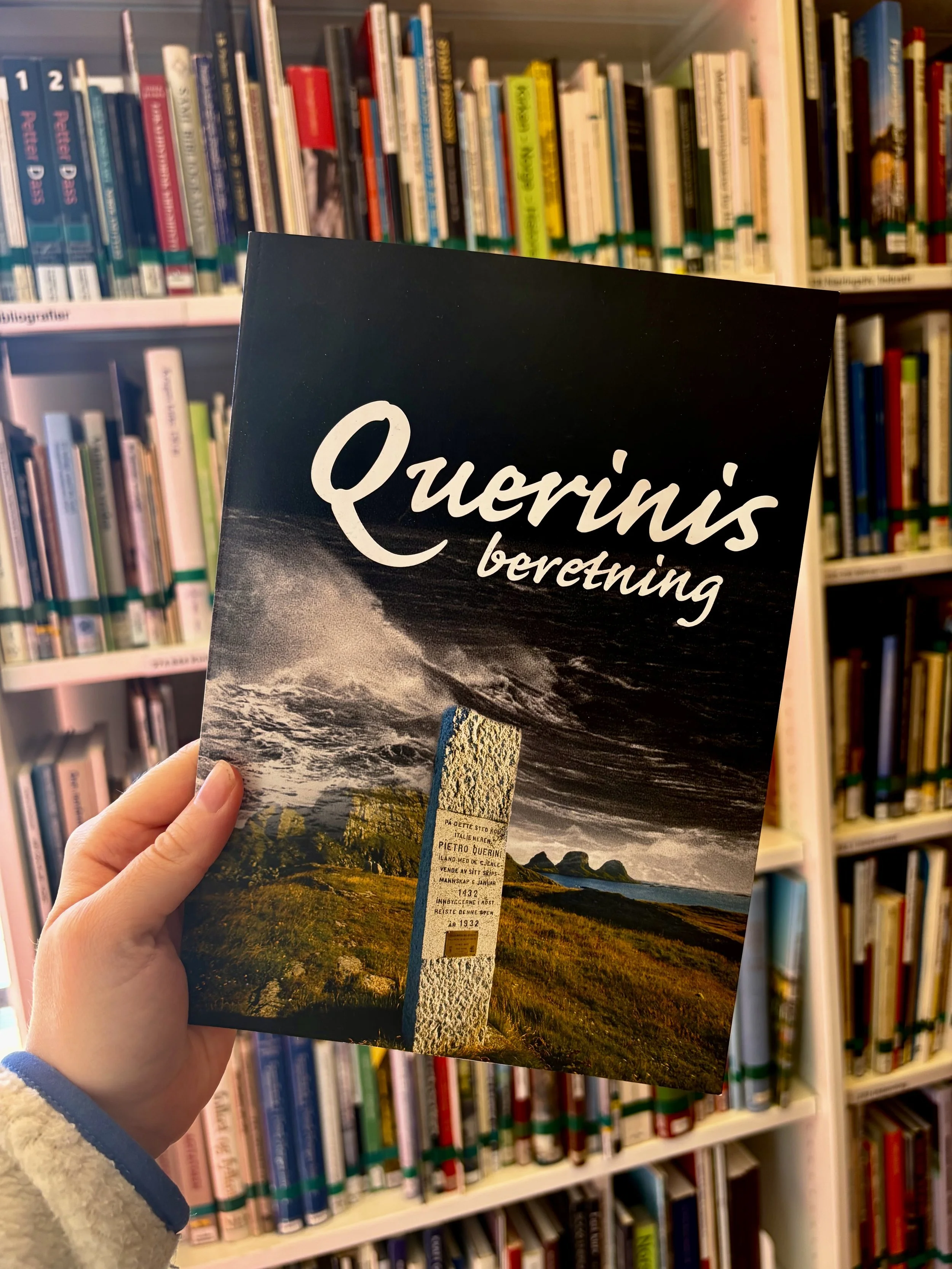
All libraries in Nordland have been sent Querini's account . The aim is to make the historical narrative available to a wide audience and to strengthen knowledge about Pietro Querini's journey and the cultural and historical significance it has had for the region.
maps exhibition
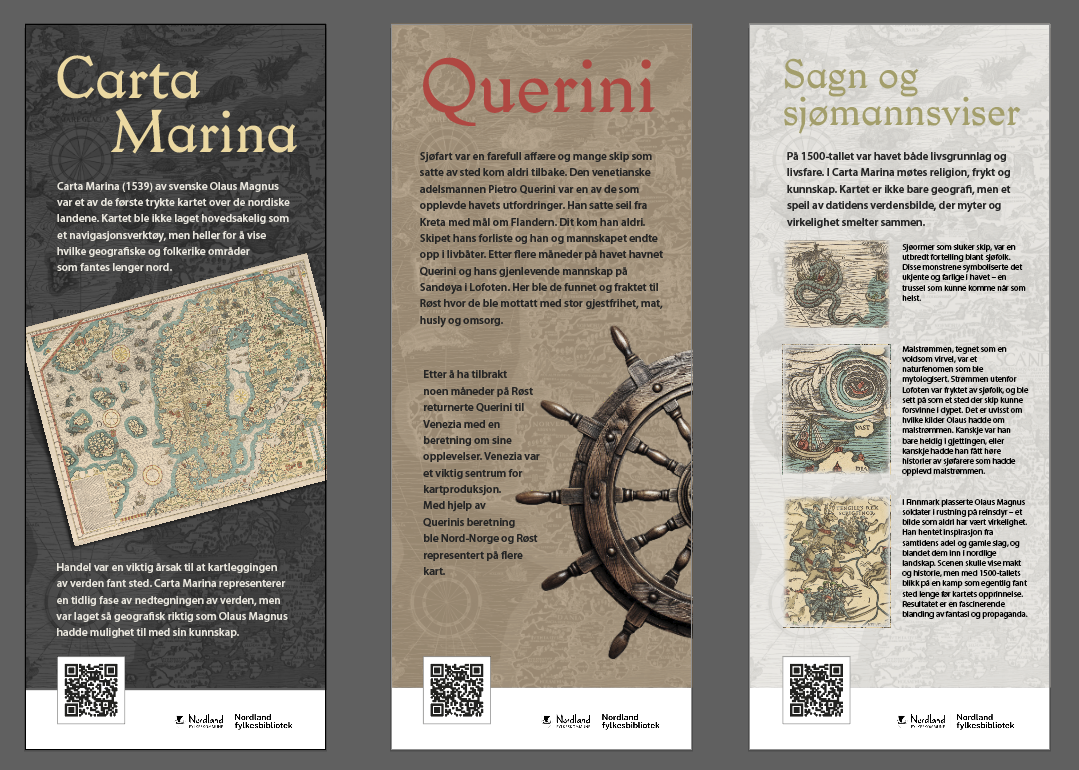
This exhibition, created in conjunction with the Hospitality Symposium, is based on the story of the Venetian nobleman Pietro Querini and his dramatic journey north. The exhibition is intended as a way to draw Querini's story, and the larger historical contexts in which it is part, into libraries as open spaces for knowledge sharing, reflection and conversation.
Through maps , stories and visual references, the exhibition connects seafaring, trade, cartography and ideas about Northern Norway in the early modern period. A central work is the Carta Marina from 1539 by Olaus Magnus, one of the first printed maps of the Nordic region. The map shows not only geography, but also how the world was understood in the 16th century, where myths, fear, faith and knowledge existed side by side.
The story of Querini's shipwreck and stay on Røst in the 15th century forms an important backdrop for the exhibition. The encounter with the hospitality of the local population was of great importance, both for Querini personally and for how Northern Norway was later described and mapped in Europe. The exhibition highlights this story as an early example of cultural exchange, care and human community, themes that are central to the Hospitality Symposium.
The exhibition is produced as roll-ups, making it easy to transport and adapt to different library rooms. The roll-ups can be displayed together as a comprehensive exhibition, divided into smaller groups or presented independently of each other, so that the layout can be easily varied according to available space and local conditions. The exhibition will travel to libraries in the fall of 2026 and has been developed specifically with the library as a dissemination arena.
In connection with the exhibition, it is also possible to arrange a lecture. maps and navigation at sea in Querini's time by Benedicte Briså, either physically or digitally. The lecture takes the audience into a period when the systematic mapping of the world was still in its early stages, and where maps intended for practical use was in development. Cartography only gained momentum in the second half of the 15th century, after Querini’s fateful voyage, and the lecture examines what European mapmakers knew and believed about Norway, and especially Northern Norway, in the century that followed. The audience is invited into a world marked by storms and maelstroms, the stockfish trade and tales of sea monsters, where fear, experience and attempts to understand the powers of the sea merge.
Lectures in the libraries
Several libraries have received lectures with musical tidbits about the dramatic incident where Captain Pietro Querini and his crew were shipwrecked in the North Sea and ended up on Røst , a cold January day in 1432.
Mediator Hildegunn Pettersen is also the initiator and artistic director of Røst -society's Querini opera.
The recording is from Rana Library, November 6, 2024.